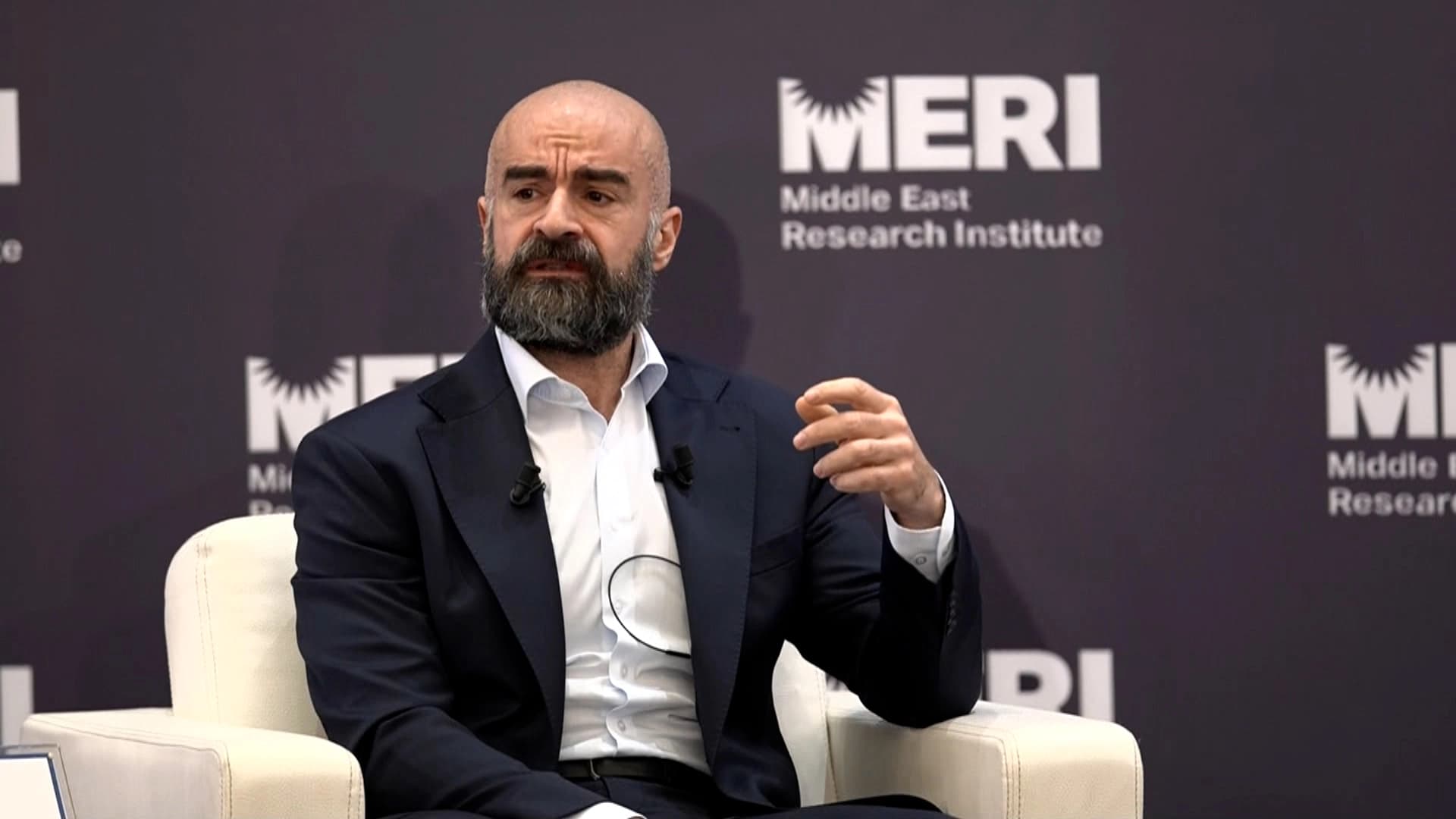
ERBIL, Kurdistan Region - Patriotic Union of Kurdistan (PUK) leader Bafel Talabani said Monday that Kurds are well-positioned to help mediate between Tehran and Washington, revealing that his party has also discussed with Iranian leaders the possibility of launching a peace process to address the long-standing Kurdish question in the country.
Speaking at the annual Middle East Research Institute (MERI) Forum in Erbil, Talabani argued that the Kurdistan Region's ability to maintain relations with competing regional and international powers could help advance diplomatic efforts as Washington and Tehran struggle to reach a lasting agreement following months of war.
"Both sides trust us. Both sides trust us," he said, referring to the United States and Iran. "There are individuals in this Kurdistan of ours who are respected worldwide, more so than any other person. Let these people be the ones helping the [US-Iran talks] process."
The remarks reflect a policy Kurdish leaders have pursued since the US-Israeli war against Iran began in late February: keeping the Kurdistan Region out of the fighting while leveraging its relations with Tehran and Washington to encourage negotiations.
That position has come under severe strain as Iran and Iran-aligned Iraqi armed groups have repeatedly attacked the Region - including Iranian Kurdish opposition bases. Despite assurances from Kurdish leaders that their territory would not be used against neighboring countries, the Kurdistan Region has withstood upwards of 1000 attacks since the onset of the war from Iran and Iran-aligned factions within Iraq.
Talabani suggested that Kurdish figures had already contributed to easing tensions between Washington and Tehran, although he declined to disclose the details of their involvement.
"Some of us were involved in the process and helped. Together, I believe we can be of even more help in the process," he said.
In another part of the discussion, Talabani said the US and Iran already maintain official communication channels, but insisted that “in several very, very critical areas, we have been able to assist with progress between America and Iran." on several key sensitive issues.
He declined to elaborate, joking that officials on both sides would be displeased if he revealed more.
In August, US news outlet Axios reported that Kurdistan Region President Nechirvan Barzani had helped establish a backchannel between the Trump administration and the Islamic Revolutionary Guard Corps (IRGC) during negotiations to end the war.
According to the report, then-US Director of National Intelligence Tulsi Gabbard contacted Barzani in May after American negotiators became uncertain whether Iranian officials involved in negotiations had the backing of the IRGC, which had gained considerable influence over Tehran's decision-making during the conflict.
Barzani subsequently arranged secure communication with IRGC commander Ahmad Vahidi on May 14, receiving assurances that the powerful military institution supported negotiations. He then relayed the message to Gabbard, who briefed the White House, according to Axios.
The report also said Washington explored the possibility of holding secret US-Iranian talks in Erbil, although the meeting never materialized.
Following the investigation, Kurdistan Region Presidency spokesperson Dilshad Shahab confirmed that Barzani had helped relay messages between Washington and Tehran, stressing that the Region had consistently supported dialogue and negotiations.
While Talabani did not identify the Kurdish figures involved in the diplomatic contacts he described Monday, the reported backchannel showed the potential role of Kurdish leaders in establishing communication between governments that remain deeply at odds.
A Kurdish peace process in Iran?
Talabani said the PUK had raised the possibility of resolving Iran's Kurdish question through negotiations, drawing on the ongoing peace process between Turkey and the Kurdistan Workers' Party (PKK).
"Our policy with Turkey has been that what they refer to as the Kurdish issue, and the issue of the PKK and our comrades in the North [Bakur/Turkey], must be resolved through dialogue and diplomacy," he said.
"Turkey has also reached that conviction, and things have progressed very well. We are cooperating, we will cooperate, and we support this process."
Talabani then revealed that the PUK had discussed pursuing a “similar process” with Iranian officials.
“This is also a process we have begun and are ready for. It will be a lengthy process, but it will be successful," he said.
He did not specify which Iranian officials had participated in the discussions, whether representatives of Iranian Kurdish opposition parties had been consulted, or whether Tehran had agreed to enter formal negotiations.
The proposal comes against a history of armed confrontation and political grievances between Tehran and Iranian Kurdish parties, many of which have operated from bases in the Kurdistan Region for decades.
Iran considers several of the group's security threats and has repeatedly targeted their positions across the border. Under a security agreement signed by Baghdad and Tehran in March 2023, Iraqi and Kurdistan Region authorities committed to preventing Iranian Kurdish armed groups from using Iraqi territory to attack Iran.
The issue became especially sensitive after the war began on February 28. Reports emerged that Washington was considering supporting Iranian Kurdish armed groups in opening another front against Tehran, while Kurdish authorities in Iraq rejected involvement in the conflict.
In July, Iranian Foreign Minister Abbas Araghchi confirmed in an interview that he had contacted Iraqi and Kurdish leaders, as well as Turkish Foreign Minister Hakan Fidan, early in the war to warn against allowing an armed operation against Iran from the Kurdistan Region. He credited Turkey with helping prevent such a development.
Those security concerns remain a major obstacle to dialogue. Tehran has continued striking Iranian Kurdish opposition groups based in the Kurdistan Region, including after the initial ceasefire, while the Kurdish parties have maintained their demands for political rights and greater recognition within Iran.
Iran’s Consul General to Erbil Faramarz Asadi, in an interview with Rudaw TV that aired on Thursday, labelled the Iranian Kurdish parties “mercenaries” that couldn’t decide on their own to come to the negotiations table.
The Kurdistan Democratic Party of Iran (KDPI) ruled out sending Peshmerga fighters from the Kurdistan Region into the western Kurdish areas of Iran to conduct military operations, saying it has pledged to Baghdad and Erbil not to use Iraqi territory as a launchpad for war against Iran.
“We have discussed this with both the Iraqi government and the Kurdistan Regional Government [KRG]. We have decided and pledged that we will not turn Iraqi Kurdistan or Iraq into a rear front,” Khalid Azizi, the KDPI spokesperson, told Rudaw’s Hiwa Jamal on Monday.
Talabani's suggestion of an Iranian peace initiative comes as Turkey's own process with the PKK has made significant progress. The group announced its dissolution in May 2025 following a call by imprisoned leader Abdullah Ocalan and has since taken further steps toward ending its armed campaign. Last week, it announced the withdrawal of fighters from several positions near the Turkish border.
Between Washington and Tehran
Talabani's comments also build on the position he adopted during the early weeks of the Iran war, when speculation was abound that Kurdish fighters could become involved in ground operations against Tehran.
In a March interview with British broadcaster Piers Morgan, the PUK leader warned that using Kurdish forces to spearhead an offensive against Iran would be “an absolute disaster”adding that several Kurdish groups he had contacted understood the risks.
He pointed to the danger of a backlash from Iranian society, Turkey's opposition to such an operation and the possibility of further destabilizing the region.
The remarks underscored the difficult position facing the Kurdistan Region, which maintains longstanding security and political ties with Washington while sharing an extensive border and deep economic and historical connections with Iran.
Talabani pursued that approach during a high-level visit to Tehran on September 15, where he met Araghchi, Iranian parliament speaker Mohammad Bagher Ghalibaf and senior adviser Ali Akbar Velayati.
According to the PUK's account of the meetings, Talabani stressed that the Kurdistan Region and Iraq should not become parties to regional conflicts, while Iranian officials expressed appreciation for his efforts to maintain stability.
Araghchi praised Talabani and the PUK for their role in preserving security in Iraq and the Kurdistan Region. Velayati also commended Talabani's efforts to bring differing viewpoints closer together and contribute to regional stability.
On Monday, Talabani said his meetings in Iran had focused “at length” on preventing the Kurdistan Region from becoming embroiled in another round of fighting.
He also rejected suggestions that maintaining ties with competing powers meant the PUK was beholden to either side.
"I am proud of our relations with America, with Iran, with Russia, with the United Kingdom, and with many other countries," Talabani said, stressing that, the Patriotic Union of Kurdistan is nobody's puppet; it has never been anyone's man, and it never will be."
With US-Iran negotiations still struggling to produce a lasting settlement, Talabani argued that the opportunity for diplomacy should not be squandered.
He said he believed negotiators on both sides were genuinely interested in an agreement, pointing to US envoys Steve Witkoff and Jared Kushner, as well as Iranian President Masoud Pezeshkian and Foreign Minister Araghchi.
"If Iran cannot reach an agreement with America this time, it will never reach an agreement," he said.
.png&w=3840&q=75)